
Custom Screw Conveyors Engineered Around Your Process
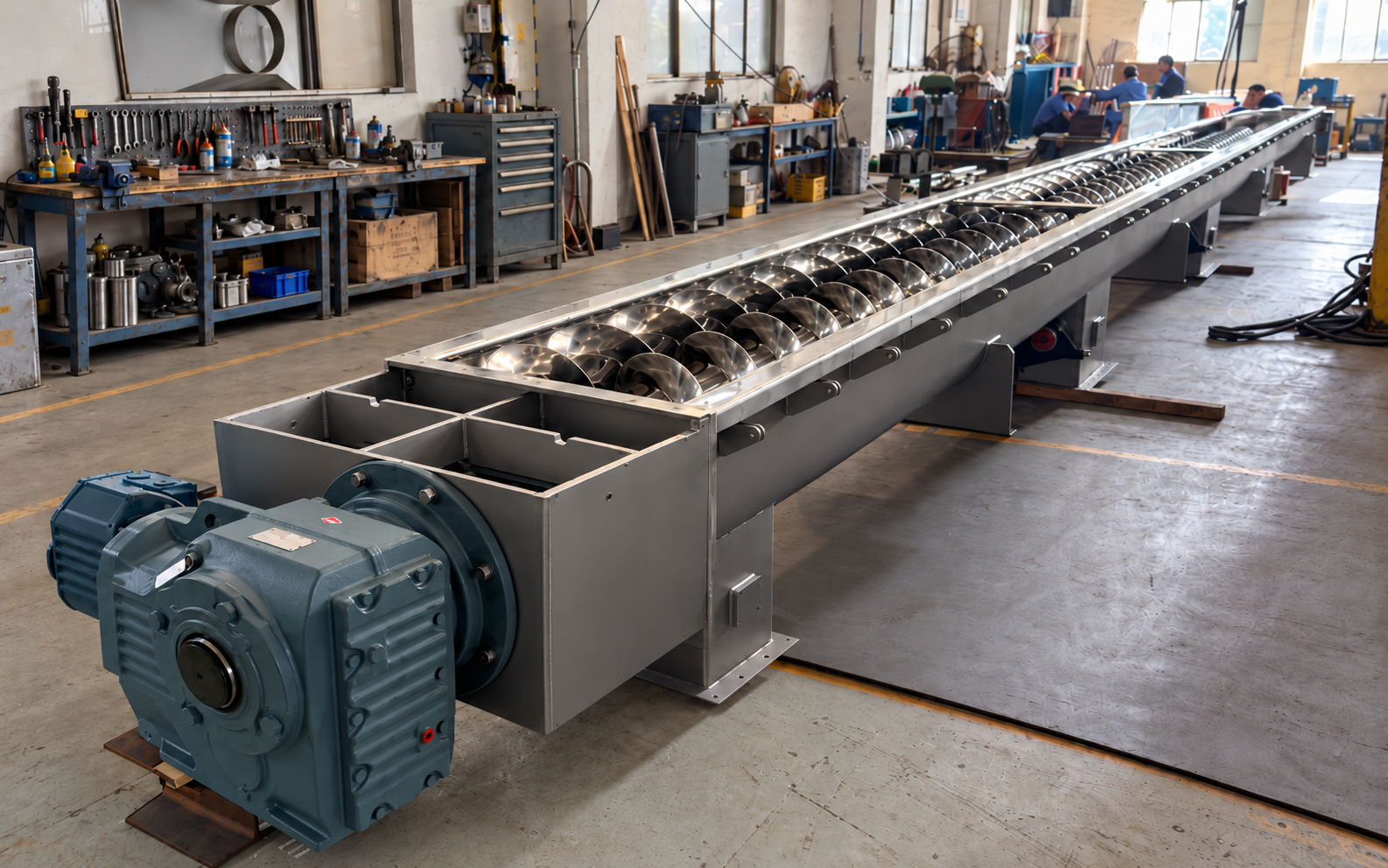
We engineer and manufacture screw conveyors around your material, capacity, layout and operating conditions.
Application Challenges
The right screw conveyor depends on more than capacity. Material behavior and operating conditions can change the construction, screw arrangement, materials and other key design decisions.
Sticky Build-Up
Cohesive products can smear, bridge or pack around the screw. The conveyor has to account for how the material actually moves and releases.
Wear & Abrasion
Abrasive duty quickly exposes weak points in flights, troughs and contact surfaces. Wear life needs to be considered before those areas become maintenance problems.
Corrosion Risk
Product chemistry, cleaning media and the surrounding environment all influence which materials should be in contact with the process.
High Temperature
Elevated process temperatures affect more than material choice. Thermal expansion, bearings, seals and surrounding components all have to tolerate the actual duty.
Dust Containment
Fine powders can escape through covers, shafts and connection points. Containment depends on how the complete conveyor is enclosed and interfaced with the process.
Long Runs
Long conveying distances become more demanding when hanger bearings are undesirable or impossible. Shaft support, deflection and connection strategy then become critical.
Cleanable Design
When cleaning is part of the process, access and product-contact details matter just as much as conveying performance. Residue traps should be addressed before fabrication.
Design Logic
A change in material, capacity, duty, layout or operating environment can change more than the size of the conveyor. It can affect the screw, trough, shaft arrangement, construction material, sealing and drive selection.
Material Behavior
Bulk density alone is not enough. Flowability, particle shape, stickiness, abrasion and temperature can all influence screw selection and conveying behavior.
Required Duty
Throughput has to be considered together with operating pattern. Continuous conveying and intermittent feeding can require different configurations.
Layout Interfaces
Available length, inclination, inlet and outlet positions, supports and surrounding equipment can determine how the conveyor has to be arranged.
Operating Environment
Corrosion, dust containment, cleaning, heat and maintenance access can influence materials, sealing and construction details before fabrication begins.
Built Right
Once the drawing is approved, it becomes the reference for fabrication, assembly and inspection. The agreed configuration is carried through to the finished conveyor.
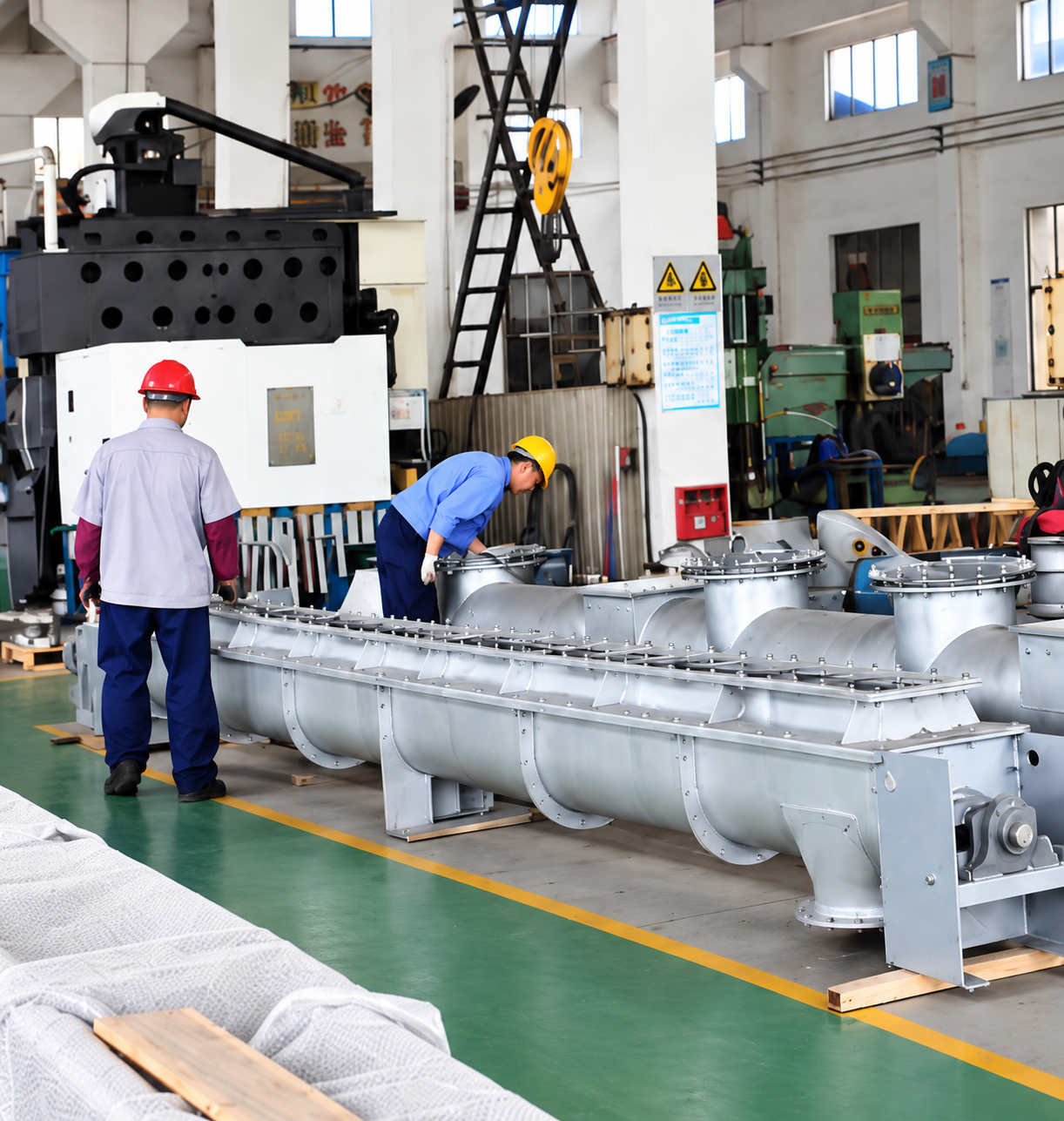
Project details are carried through fabrication, fitting, alignment and final equipment checks.
Material Prep
Materials and key components are prepared against the confirmed project requirements before fabrication begins.
Fabrication
Troughs, flights, shafts and connection points are made to the dimensions and arrangement shown on the approved drawing.
Assembly
Fit-up, shaft connections, supports and drive position are checked as the conveyor comes together.
Alignment Check
Key dimensions, interfaces and shaft alignment are checked before the equipment moves to final inspection.
Run Test
Where the assembled equipment allows, operation is checked for interference, abnormal runout and other visible mechanical issues before release.
Real Projects
No two conveying duties are exactly the same. These projects show how material, capacity, layout and operating conditions shaped the final equipment.
Project Process
You do not need every detail ready at the beginning. Start with the information you have, and the technical and commercial details can be confirmed as the project moves forward.
Share Requirements
Send the material, required capacity and approximate conveying distance. Layout drawings or site photos are helpful when available.
Engineering Review
We review the duty and clarify the conditions that may affect conveyor type, construction and key configuration decisions.
Proposal & Quote
The proposed equipment scope, main configuration and quotation are prepared for your review.
Drawing Approval
Key dimensions, interfaces and the agreed arrangement are confirmed before fabrication starts.
Production & QA
The conveyor is manufactured, assembled and checked against the approved project information.
Packing & Shipment
Packing, equipment identification and shipment-related documents are prepared when the order is ready to dispatch.
Screw Conveyor Solutions
Explore screw conveyor configurations for different materials, conveying directions and process requirements.
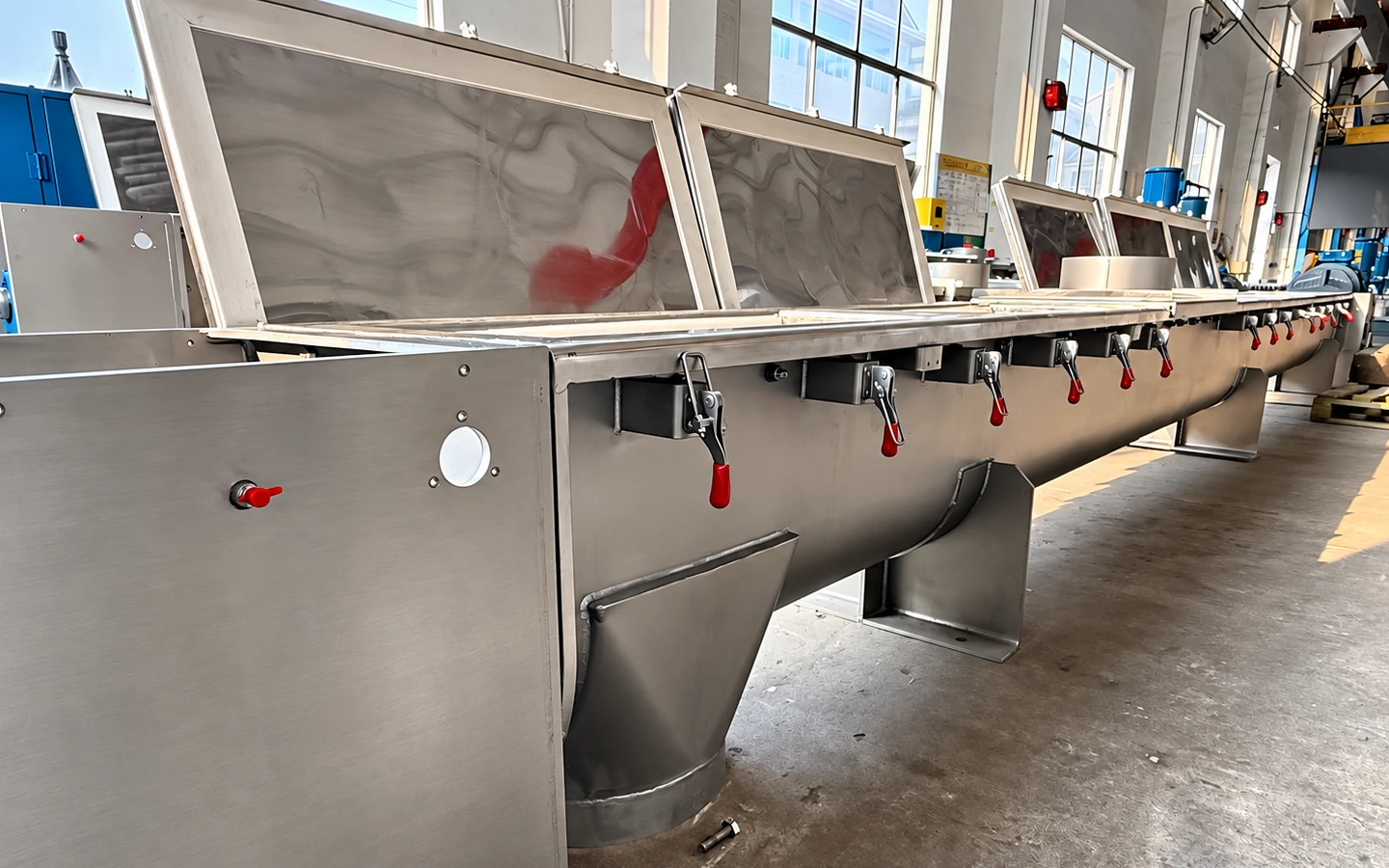
U-Trough Screw Conveyor
Accessible trough construction with flexible configuration for general horizontal and inclined conveying duties.
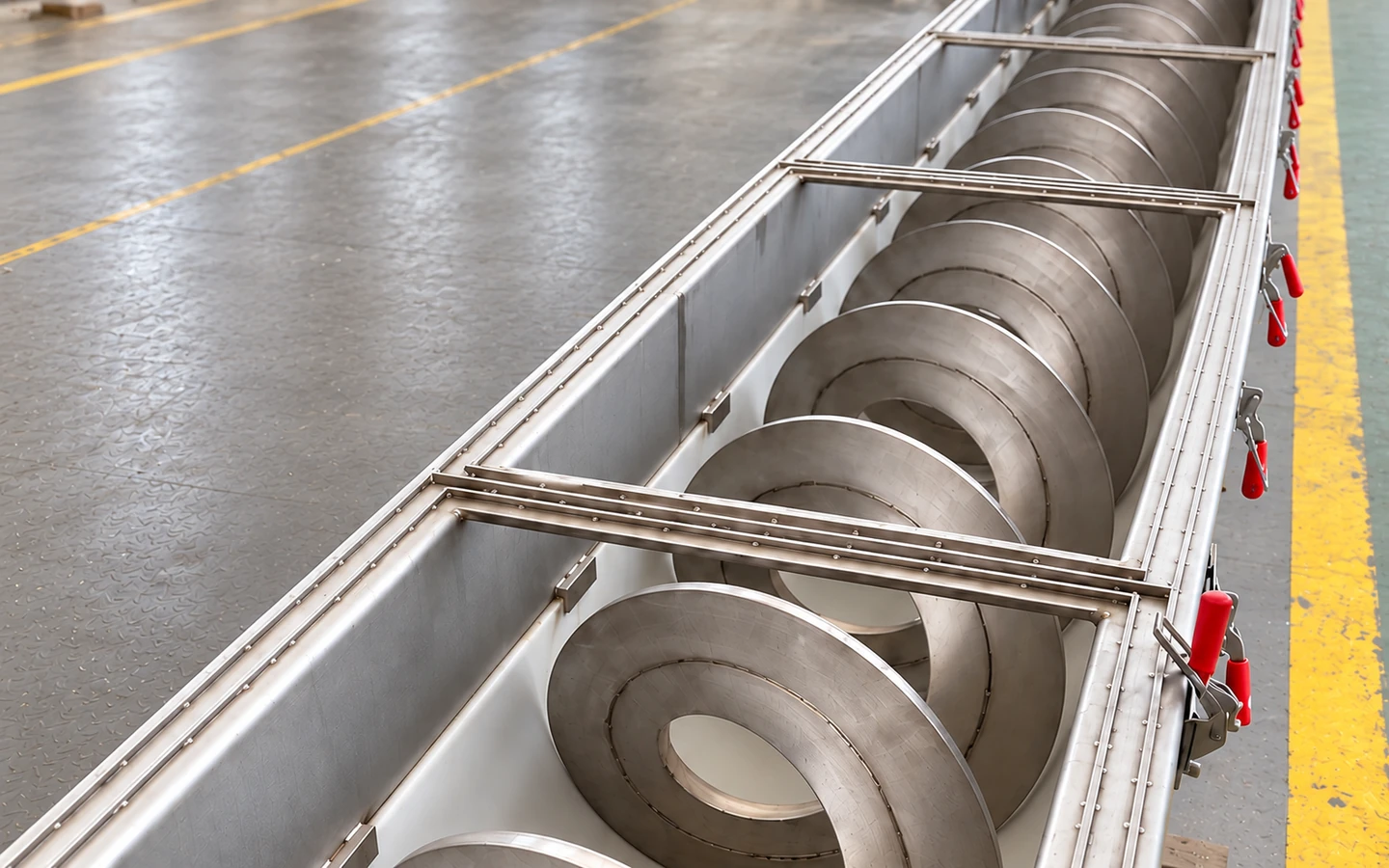
Shaftless Screw Conveyor
A center-shaft-free conveying arrangement suited to wet, sticky, fibrous and other difficult-to-handle materials.
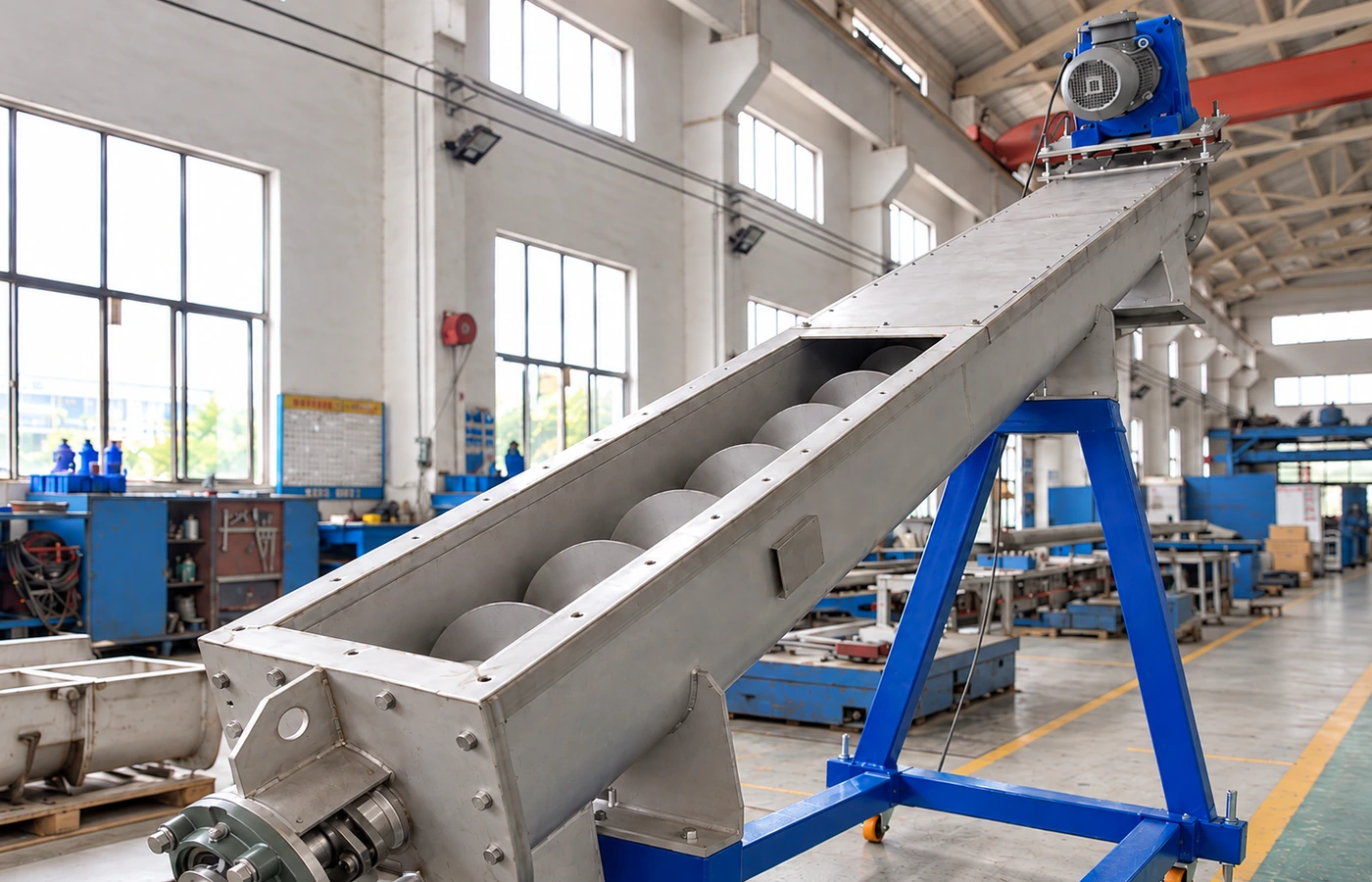
Inclined Screw Conveyor
Engineered for conveying bulk materials on an incline, with screw geometry, speed and power selected for the required lift.
Common Questions
What is the typical lead time?
Lead time depends on the conveyor configuration, materials, fabrication requirements and current production schedule. A project-specific delivery estimate is provided with the quotation.
Can you ship internationally?
Yes. Packing and shipment arrangements can be prepared for international delivery, with the delivery terms confirmed as part of the order.
What delivery terms can you quote?
Delivery terms are agreed for each project according to the destination and shipping arrangement. The applicable Incoterm is confirmed in the commercial offer.
Can project documentation be provided?
Required drawings and project documentation can be supplied according to the agreed scope. Additional calculation or verification documents can also be prepared when required for the project or applicable legal requirements.
Can you supply replacement parts later?
Replacement components can be identified against the original project information, helping maintain compatibility with the supplied equipment.
Can you work with our local installer?
Yes. Drawings and equipment information can be used to coordinate installation questions with your site team or local contractor.
Start Here
Tell us what you are moving and what the process needs to achieve. We will review the application and follow up on the technical details that matter.
Prefer a quick conversation?
Message us on WhatsAppProject Details
No commitment required. We evaluate application feasibility first.