Cement & Building Materials
Cement and building-material applications often involve dense, abrasive and dusty bulk solids that place high demands on conveying equipment. Screw conveyor design should reflect material characteristics, required capacity, operating duty and expected wear conditions.
What Matters
Material behavior, process conditions and plant priorities shape the conveyor decisions that matter here.
Cement and building-material applications often involve dense, abrasive and dusty materials with demanding continuous-duty requirements. Cement powder, sand, aggregates and similar bulk solids can create high loading, dust generation, transfer-point impact and accelerated wear throughout the conveying system.
These conditions influence conveyor size, screw construction, operating speed, enclosure, inlet arrangement and discharge design. Bulk density, particle size, abrasive severity, dust behavior, feed consistency and expected operating duty should therefore be reviewed for the actual application.
Typical Materials
Representative materials help frame the duty. Final selection still depends on the actual product and handling behavior.
- Cement powder
- Fly ash
- Sand
- Limestone
- Dry mortar
- Aggregate fines
Bulk density, particle size, moisture content, dust behavior and abrasive severity should be confirmed for the actual material.
What to Confirm
These details help narrow the equipment and design direction for your application.
- Material type, bulk density and particle-size range
- Abrasive severity and expected wear conditions
- Required capacity, conveying length, elevation and orientation
- Feed method, transfer-point loading and expected surge conditions
- Dust generation, containment and enclosure requirements
- Operating hours, duty cycle and maintenance expectations
Recommended Equipment
Equipment types commonly relevant to this industry. Final selection depends on the material, duty and plant layout.
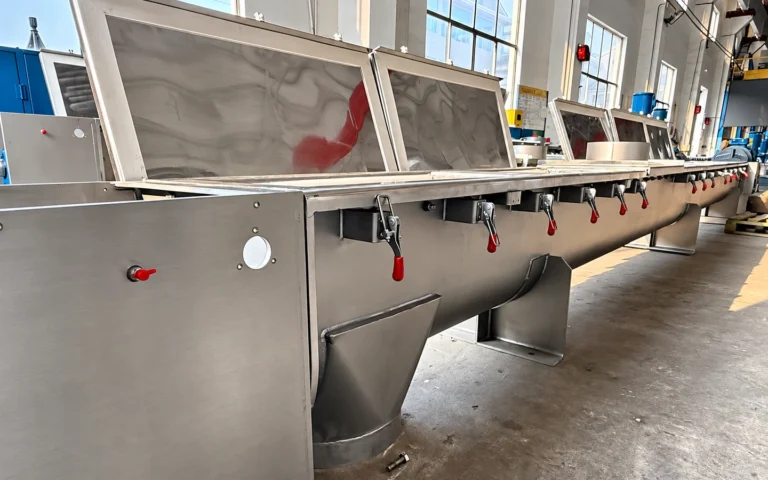
U-Trough Screw Conveyor
A U-trough configuration for applications where inspection, cleaning and maintenance access matter alongside enclosed conveying and plant layout requirements.
View Product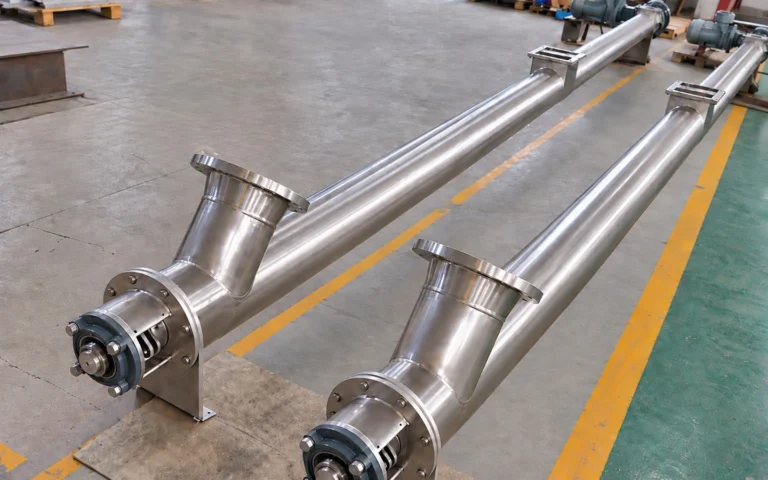
Tubular Screw Conveyor
A fully enclosed screw conveyor with a tubular casing for contained transfer of powders and granular materials, suited to compact layouts and applications where material exposure should be minimized.
View Product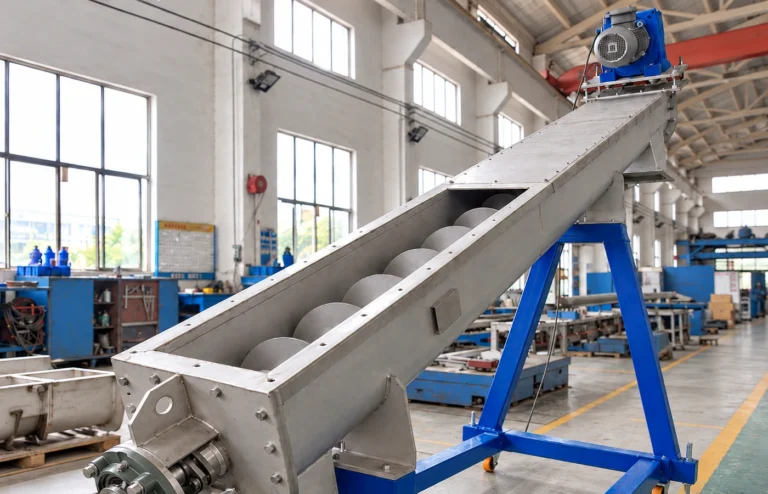
Inclined Screw Conveyor
Designed for bulk material conveying on an incline, with screw geometry, speed, feed arrangement and power selected for angle, lift and material behavior.
View Product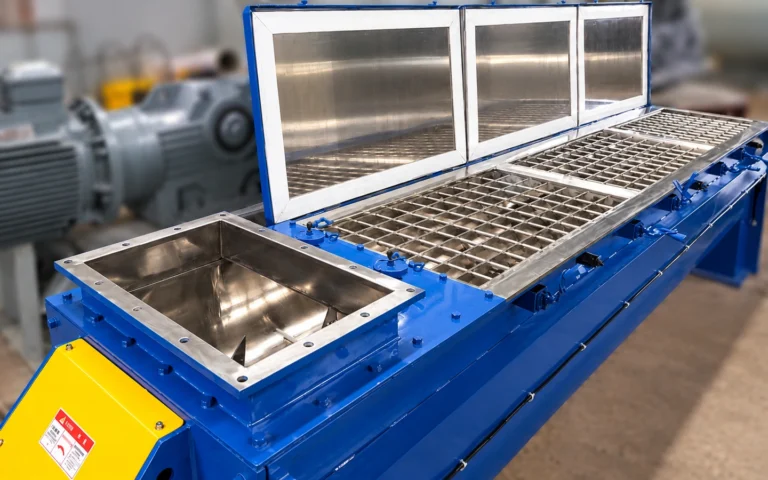
Mixing Screw Conveyor
Custom mixing screw conveyors combine material transfer with in-line blending using ribbon or paddle elements, selected for material behavior and mixing requirements.
View Product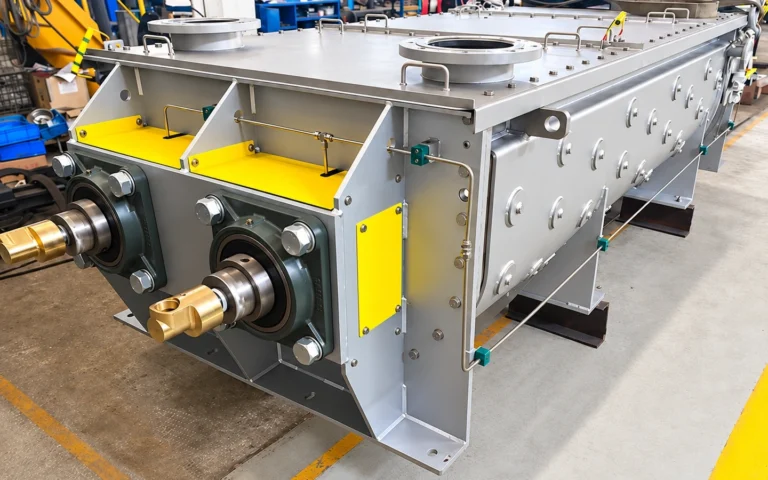
Thermal Screw Conveyor
Designed for indirect heating or cooling of bulk materials using a circulating thermal medium through jacketed and/or internal heat-transfer surfaces.
View Product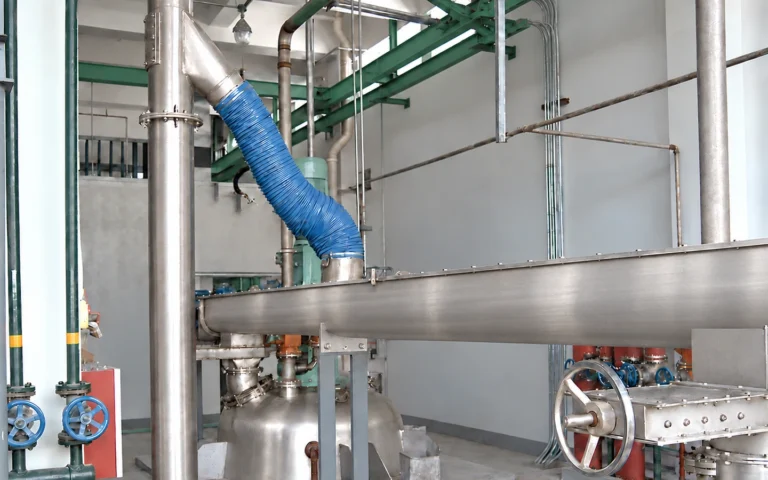
Vertical Screw Conveyor
Engineered for vertical elevation of bulk materials in a compact footprint, with controlled feeding and screw geometry matched to the required lift.
View Product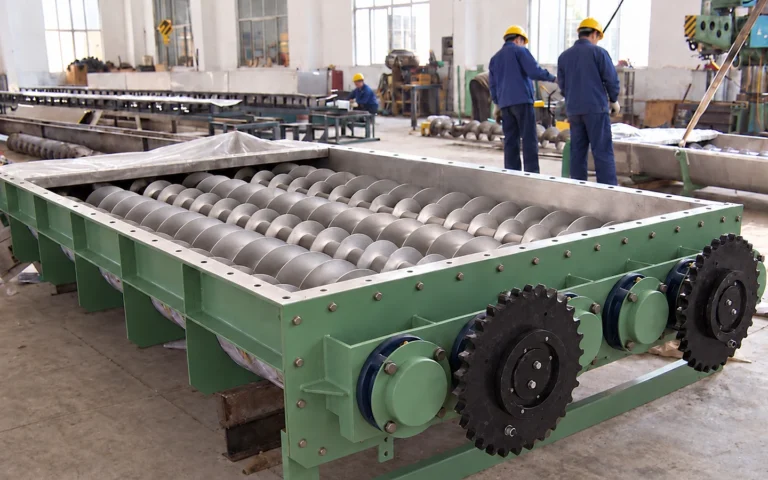
Multi-Screw Conveyor
Multiple screw shafts work within a common housing to collect and convey bulk materials across wide receiving areas or multiple feed points.
View ProductRelevant Solutions
Engineering conditions that may change conveyor design, construction or maintenance priorities in this industry.
Start Here
Tell us what you are moving and what the process needs to achieve. We will review the application and follow up on the technical details that matter.
Project Details
No commitment required. We evaluate application feasibility first.